One-Time Workshop or Weekly Class? How to Choose What Fits Your Life in Bengaluru

One-time workshop vs weekly class bengaluru: how to choose what fits your life
Pick a one-time workshop if you want to sample a skill, give an experience as a gift, or can't protect the same slot every week. Pick a weekly class if you want to build real competence, lock in a routine, and learn with the same cohort over 6 to 12 weeks. Still torn on the one-time workshop vs weekly class bengaluru question? Book one session first, then decide — the continuation test at the end of this piece makes that call easy.
This guide defines both formats from first principles, puts rupee figures against each, and factors in the one variable most comparison pieces ignore: Bengaluru traffic that now averages 63 minutes one-way over just 19 km, per Bangalore Mirror's 2025 report citing MoveInSync. We're Zoozhi, an experience marketplace in India, and we list both formats across arts, fitness, food, music, tech, outdoor, and education — so we see which choice holds up for which reader.

Workshop vs weekly class: what each format actually means
A workshop is a single, self-contained session — typically 2 to 4 hours, one topic, no prerequisite, and no obligation to return. A weekly class is a structured curriculum spread across 8 or more sessions at the same day and time each week, with each session building on the last.
The structural differences matter more than the labels. Workshops usually run larger cohorts of 12 to 25 learners, compress one skill into one intensive sitting, and end with a tangible output — a thrown pot, a cooked dish, a learned sequence. Weekly classes run smaller groups of 6 to 15 learners, spread 8 to 16 sessions over two to four months, and swap intensive output for progressive technique.
A third format sits between them: the short course. These run 3 to 6 sessions over a few weeks and suit readers who want more than a taster but can't commit to a full term. Treat short courses as a workshop with homework, or a weekly class with an exit ramp — the same decision logic from this guide applies.
First-time buyers in the category routinely conflate the three. If you've booked an experience before, skim ahead; if this is session one for you, the three definitions above decide roughly 80% of the one-time workshop vs weekly class bengaluru question before you even open a listing page. Explore Learning and Education experiences on Zoozhi to see both formats side by side.
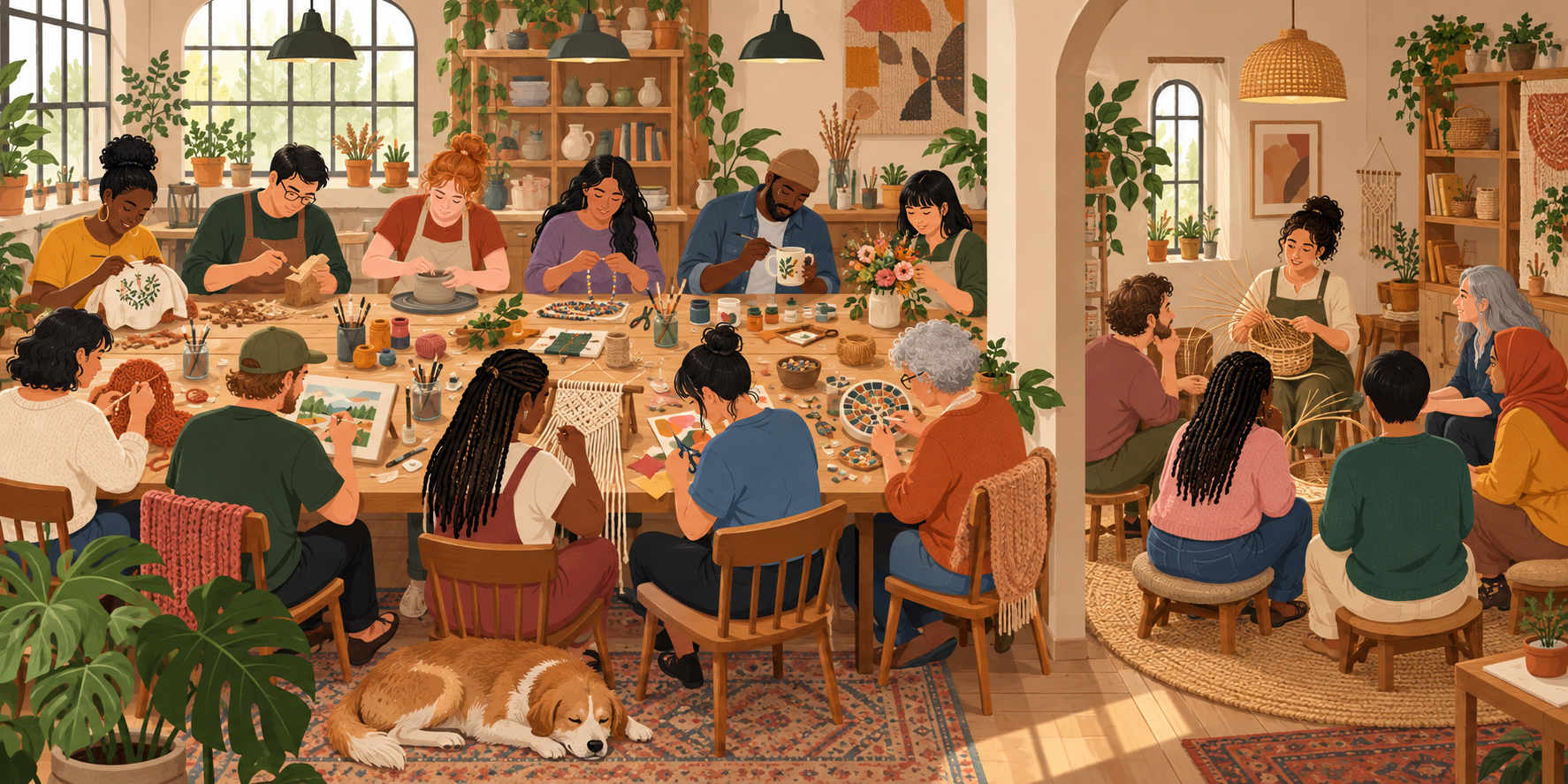
When a one-time workshop is the right call
In Bengaluru, beginner pottery workshops start at INR 1,500 per session (Justdial, 2026) — low enough that booking a workshop is the right call when you're sampling, gifting, or scheduling around something that won't bend. The benefits of one-time workshops for skill learning are concentrated at the start of the journey: they answer "do I like this?" faster and cheaper than any other format.
Four reader types get the most from the single-session format. The curious explorer who wants to try pottery before committing a term's fees. The gifter buying an experience for a birthday. The travelling professional whose weeks don't repeat. The skill-switcher testing whether a new domain is worth deeper study. In every case, the single session workshop advantages bengaluru learners care about are the same: zero ongoing obligation, immediate hands-on output, and a finished piece to take home that day.
The honest trade-off is retention. A compressed single session produces weaker long-term skill retention than the same hours distributed across weeks — PMC's study on spaced versus massed cue-approach training showed spaced motor-skill practice yields greater retention than massed practice. Carpenter et al.'s 2022 Memory & Cognition study pushed the gap further, finding evenly distributed spaced schedules produced 1.9 times greater retention accuracy at a 12-hour test than massed schedules. One workshop is enough to decide if a craft fits you; it is rarely enough to keep the skill.
Pricing gives you a cost baseline. Justdial's 2026 pottery class listings show beginner pottery workshops at INR 1,500 to 3,000 per session, pottery wheel sessions at INR 3,000 to 6,000, clay pot-making at INR 2,000 to 4,500, and advanced ceramics courses at INR 5,000 to 10,000. Use those as your anchor when a studio quotes you a number.
When a weekly class pays off
Weekly classes pay off after roughly 6 weeks of attendance, which is when Gardner et al.'s 2023 Psychology & Health review found gym-goer habit strength typically plateaued — meaning the format rewards readers who've already decided they enjoy a category and now want to get genuinely good at it. Weekly classes vs short courses for adults is really a question of ambition: short courses finish a project, weekly classes build a practice.
Three reader groups should default to weekly. The returning hobbyist who knows they like painting and wants structured progression. The reader looking for a fixed social anchor — same room, same people, every Thursday at 7. And the goal-oriented learner training toward a recital, exhibition, or fitness milestone, where cumulative reps are the point.
The retention evidence is strong. PMC's 2017 review of spacing repetitions and long-term retention found distributing training over two weeks produced better 8-week retention than compressing it into one, with an effect size of d = 0.46. Spaced practice outperforms massed practice across hundreds of studies — more on that in the decision framework below.
Habit formation is the second reason weekly works. Lally et al.'s 2010 European Journal of Social Psychology study found real-world habit automaticity took anywhere from 18 to 254 days across 96 volunteers, and that missing a single opportunity didn't materially derail the process. Gardner et al.'s 2023 Psychology & Health review on habit-based behaviour change adds a useful threshold: new gym members who crossed a habit score of 2.8 out of 5 were more likely to keep showing up. Gardner's 2022 Cogent Psychology work makes the mechanism explicit — habit strengthens along a continuum, so each weekly session incrementally builds automaticity rather than flipping a switch.
Peer accountability is the third reason, and it's concrete rather than vague. The same cohort every week creates a small social cost to skipping that solo workouts and drop-in workshops don't produce.
Trade-offs: higher upfront or monthly cost, a fixed slot you have to protect, and the risk of dropout when your commute or job hours shift — which brings us to the Bengaluru-specific filter most guides skip.

The Bengaluru reality check: traffic, neighbourhoods, and weekend availability
In 2025, Bengaluru's average one-way commute rose 16% to 63 minutes over just 19 km, according to Bangalore Mirror's report citing the MoveInSync On Wheels Half-Yearly Report — so pick your radius before you pick your format. A weekly class across the city can burn two hours of travel per session, which is often longer than the class itself.
I made this mistake once, booking a Saturday pottery term in Indiranagar while living in HSR. Three sessions in, the drive home at 9 pm had turned a two-hour class into a four-hour evening, and I dropped out before session five. A workshop near home would have been the honest choice.
The congestion is also getting worse in bursts. The same MoveInSync data showed Outer Ring Road saw a 76-point congestion surge over 8 weeks in May and June 2025, with delays tripling. Times of India's 2026 report on Bengaluru school commutes found a 10-km ride on the Whitefield–Sarjapur corridor now hits 112 minutes, with school buses averaging 9.2 kmph.
The practical implication: for weekly classes, proximity beats programme quality. A great studio in Koramangala is a poor choice if you live in Whitefield and work late on weekdays. Studio density matters too. Indiranagar and Koramangala carry the heaviest concentration of arts and fitness studios on marketplaces like Zoozhi. HSR and Jayanagar have a growing cluster. Whitefield and north Bengaluru are thinner — filter by neighbourhood before you filter by category.
Weekend availability flips the maths. Many Bengaluru studios run workshops only on Saturdays and Sundays. If your weekends are already crowded with family, travel, or recovery, a weekday evening weekly class five minutes from home may be more reliable than a workshop that keeps selling out before you can book.
Cost per session: what you actually pay in Bengaluru
Workshop drop-ins in Bengaluru run from INR 1,500 to INR 10,000 per session depending on category, per Justdial's 2026 listings — so compare formats on cost-per-session, not sticker price. A monthly membership divided by sessions often undercuts a workshop drop-in, but only if you actually attend.
The verified workshop drop-in figures: pottery beginner INR 1,500 to 3,000; pottery wheel INR 3,000 to 6,000; clay pot-making INR 2,000 to 4,500; advanced ceramics INR 5,000 to 10,000 (Justdial, 2026). Verified monthly membership figures for dance, painting, music, and fitness vary enough by studio and neighbourhood that you should check current listings on Zoozhi or the studio's own page at the time of booking.
Here's the maths that catches people out. Suppose a monthly dance class costs INR 4,000 for 8 sessions — in this example, that works out to INR 500 per session. A drop-in workshop at INR 2,000 costs four times more per session on paper. But if you only attend 3 of the 8 monthly sessions, your effective cost climbs to roughly INR 1,333 per session, and the gap closes fast. Attend only 2 and the monthly membership is more expensive than the one-off.
The honest framing: workshops have no sunk-cost pressure, which is freeing if you're a casual learner and expensive per session if you turn out to love the craft. Monthly memberships create financial accountability, which helps consistent attendees and punishes irregular ones.

How to choose: a five-minute decision framework
Across roughly 300 studies, distributed practice beats massed practice with an average effect size of 0.60 (Frontiers in Education, 2021) — so for choosing between workshop and class format, match your learner type to the format first, then stress-test with the schedule and continuation checks below.
- Complete beginner or curious explorer. Book a workshop first. Validate interest before committing money and schedule.
- Returning hobbyist or skill-switcher. Go straight to a weekly class. You already know you enjoy the category; what you need now is structured progression.
- Goal-oriented learner training for a performance, exhibition, or fitness milestone. Weekly is non-negotiable. Frontiers in Education's 2021 meta-analysis of ten learning techniques — drawing on 242 studies and more than 169,000 participants — ranked distributed practice and practice testing as the two most effective learning techniques across the research base.
- Gifter or one-time experience seeker. A workshop is the only format that makes sense. Don't saddle the recipient with a recurring obligation.
Then run two filters. The schedule filter: if you can't protect the same two-hour slot every week for at least 6 weeks, a workshop is more honest about your real availability. The continuation test: after your first session — workshop or class — ask, "Would I pay to do this again next week?" Yes means book the recurring class. No means the workshop was the right call and you've saved yourself a monthly commitment.
If cost is the deciding factor, run your realistic attendance through the cost-per-session calculation from the previous section before you sign anything. That one calculation settles most one-time workshop vs weekly class bengaluru decisions on its own.
Where to book workshops and weekly classes in Bengaluru
Zoozhi lists verified hosts across 8 experience categories in Bengaluru — so start with one verified session, use the continuation test, and decide from there. Several platforms list experiences in the city, and each one is strongest in a different place.
Zoozhi carries verified hosts across arts, fitness, food, music, tech, outdoor, education, and entertainment — both one-time workshops and recurring sessions. Hosts go through credential checks and quality assessment, booking is instant with no hidden fees, and QR tickets handle venue entry. Best for readers who want confidence in the host before paying, and who want both formats visible in one place. Browse pottery workshops in Bengaluru, dance classes near you in Bengaluru, or arts and craft workshops on Zoozhi to start.
Eventbrite and Townscript are two of the largest general-purpose event ticketing platforms available in India, and both carry deep inventory for conferences, festivals, and larger ticketed events — if you're buying a ticket to something with hundreds of attendees, their discovery depth beats most category-specific platforms. Meraevents and Eventshigh run similar general-event inventory with strong coverage of corporate and community events.
Troveexperiences, Iamalive, Kynhood, and Makeithappen each curate experiences with their own editorial lens — Troveexperiences and Makeithappen lean toward curated outings, Iamalive and Kynhood toward community sessions. If a specific curator's taste matches yours, that's a real advantage over a broader marketplace.
Where Zoozhi fits in: readers who value verified hosts, want workshops and recurring classes side by side, and want to run the continuation test with minimal friction between session one and session two. Learn more on the About Us — Zoozhi | India's Experiences Marketplace page, book one session, see how it fits, and continue if it does.

FAQ
Is there a difference between a workshop and a class?
Yes — a workshop is one self-contained session of 2 to 4 hours on a single topic, while a class is a recurring commitment of 8 or more sessions following a progressive curriculum. Workshops end with a finished output; classes end with a developed skill. Pricing, cohort size, and instructor pacing all follow from that structural difference.
What is the typical duration of a workshop?
Most workshops run 2 to 4 hours in a single sitting, though intensive formats can stretch to 6 or 8 hours across a full day. In Bengaluru, weekend half-day slots are the most common — Saturday or Sunday mornings for arts and crafts, evenings for cooking and music.
What is a one-day workshop?
A one-day workshop is a single-session experience completed inside one calendar day, typically 4 to 8 hours with breaks. It compresses a focused topic — sourdough baking, wheel throwing, a specific dance style — into one sitting so you leave with a tangible output and a decision about whether to pursue it further.
What are five types of workshops?
Five common categories on Zoozhi: arts and craft workshops (pottery, painting, printmaking), food workshops (cooking, baking, mixology), fitness and movement workshops (yoga intensives, dance styles, martial arts tasters), music workshops (instrument intros, vocal technique, production), and outdoor or adventure workshops (treks, climbing, nature photography). Tech and education workshops round out a sixth and seventh category for readers whose interests sit outside the arts.
About the author
By Vasumathi, Chief Experience Officer.